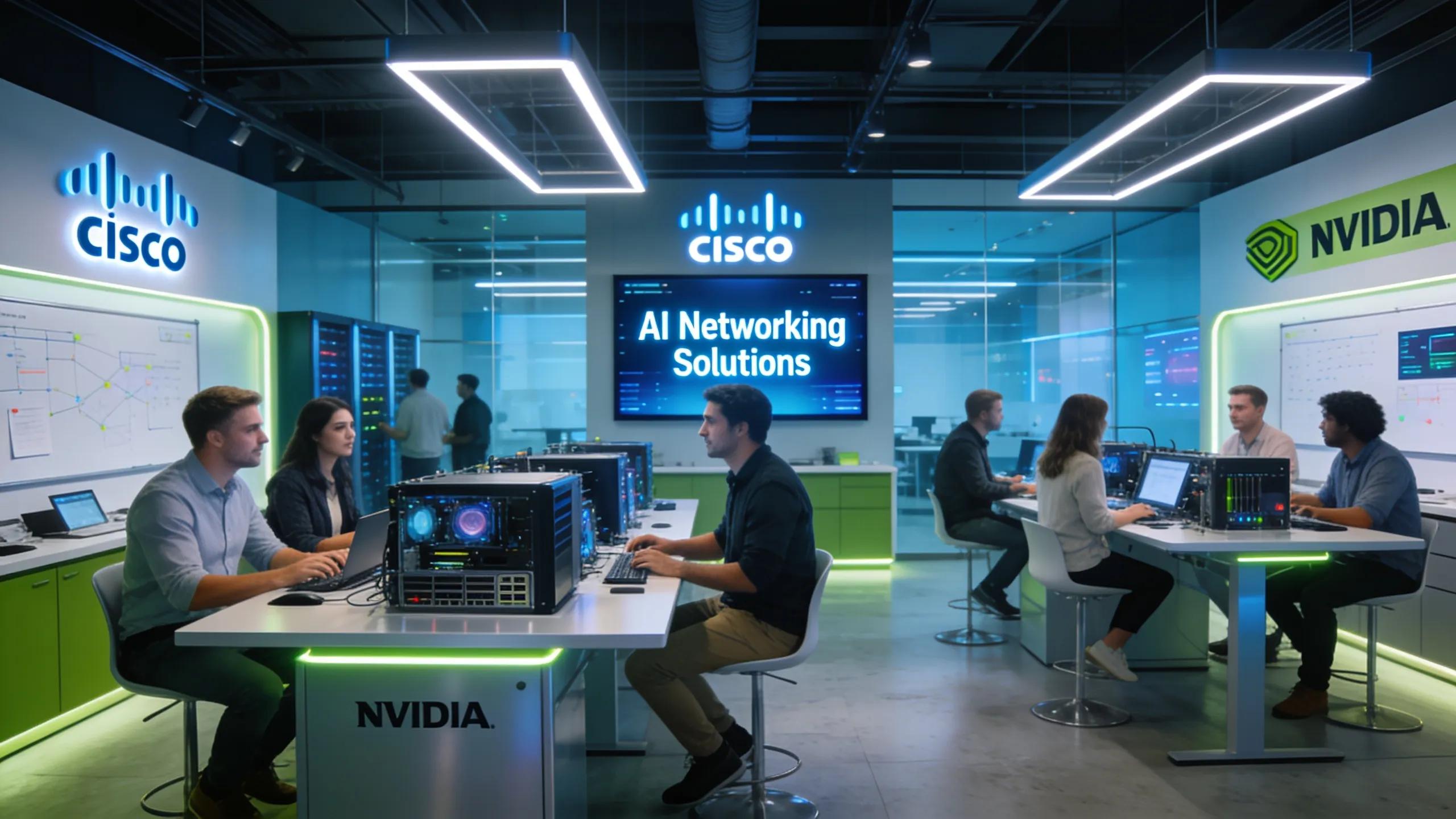
Cisco and NVIDIA: Advancing AI Networking Solutions for Scalable AI Infrastructure
By Hamza Khalid, Cisco – Global Home Page
The collaboration between Cisco and NVIDIA marks a significant turning point in the evolution of AI infrastructure, emphasizing the necessity for advanced networking solutions that can handle increasing demands of artificial intelligence workloads. This article explores how the partnership enhances AI networking solutions and outlines innovations that arise from their combined efforts. Readers can expect to learn about significant technological innovations, potential applications of these innovations across various sectors, and their overall impact on the industry. With AI becoming increasingly pivotal in business operations, understanding the underlying infrastructure is essential to leveraging its full potential. We will delve into the mechanisms at play, such as the integration of Cisco’s networking technologies with NVIDIA’s powerful GPUs, and examine the growing need for robust AI Ethernet solutions.
Key Takeaways
- The Cisco and NVIDIA partnership advances AI networking solutions for scalable, high-performance AI infrastructure.
- Integration of Cisco’s networking with NVIDIA’s GPUs optimizes data flow for intensive AI workloads.
- AI Ethernet technology offers high bandwidth, low latency, reliability, and scalability for AI data centers.
- Emerging Ethernet standards like 400G and FlexE support scalable AI data center networking architectures.
- Latency optimization techniques significantly improve AI network throughput and real-time data processing.
- Network fabric solutions such as leaf-spine architecture and SDN enable massive AI clusters at scale.
- Edge AI deployments increase demand for robust, low-latency networking closer to data sources.
- AI compute networking protocols like RDMA, InfiniBand, and NVMe over Fabrics enhance efficient data exchange.
- Case studies demonstrate improved latency, throughput, and operational efficiency using Cisco and NVIDIA AI infrastructure.
Technological Innovations
The partnership between Cisco and NVIDIA is characterized by groundbreaking technological advancements in AI networking, defining new standards for performance and reliability. Their collaboration integrates AI infrastructure with enhanced security features and assures deployment flexibility across various environments. Notably, the integration of AI Ethernet technology improves data transport efficiency, allowing organizations to optimize their networking capabilities to better support AI-driven applications.
One of the crucial highlights of this partnership is their commitment to evolving Ethernet standards that are specifically designed to support scalable AI data center networking. This evolution includes the development of robust network fabric solutions capable of supporting massive AI clusters at scale, ensuring that businesses can maintain high levels of performance despite increasing demand. Furthermore, prioritizing latency optimization significantly improves network throughput, providing organizations with faster data processing capabilities essential for AI applications.
What does the Cisco and NVIDIA partnership enhance AI infrastructure platforms?
The Cisco and NVIDIA partnership enhances AI infrastructure platforms by combining their respective strengths in networking and computing. Cisco’s expertise in network technology provides a foundation that enables the seamless operation of NVIDIA’s high-performance GPUs. This synergy ensures that data flows efficiently between components, thus facilitating tasks that require immense computational power, such as machine learning and real-time analytics.
What roles do Cisco’s networking technologies and NVIDIA’s GPUs play in AI infrastructure?
Cisco’s networking solutions play a pivotal role in ensuring that data can be swiftly and securely transmitted across an organization’s infrastructure. On the other hand, NVIDIA’s GPUs are designed to handle extensive parallel processing, which is essential for processing large datasets common in AI workloads. Together, they eliminate bottlenecks that could impede the performance of AI systems.
How does integrating Cisco Ethernet technology optimize AI data transport?
Integrating Cisco Ethernet technology optimizes AI data transport through the implementation of advanced networking protocols and standards. By utilizing low-latency, high-bandwidth capabilities, organizations can achieve faster data transfers between servers and storage, significantly reducing the time it takes for AI models to train and respond to real-time data. This optimization is critical for applications where speed and efficiency are paramount, such as autonomous driving or predictive analytics.
What are the key features of AI Ethernet technology for high-performance AI networking?
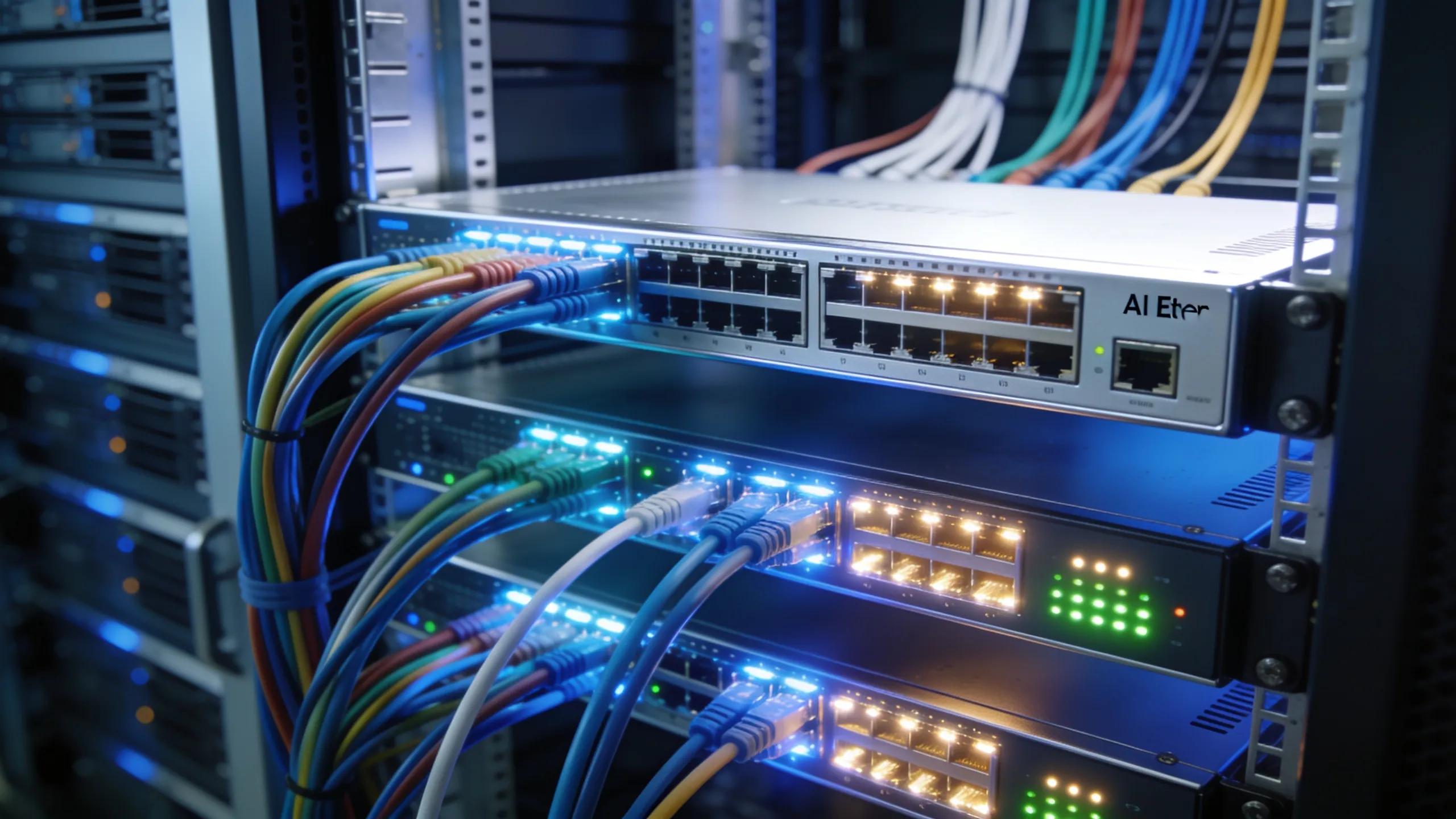
The key features of AI Ethernet technology include:
- High Bandwidth: Supports the rapid transmission of large quantities of data, accommodating the needs of AI workloads.
- Low Latency: Minimizes delays in data transmission, enabling real-time processing capabilities.
- Reliability: Ensures consistent performance, which is essential for critical AI applications requiring high availability.
- Scalability: Easily adapts to increasing data demands, allowing organizations to grow their AI capabilities without significant infrastructure overhauls.
These features combine to create a robust environment for organizations deploying AI technologies, enhancing their operational capabilities and enabling innovative applications.
Which Ethernet standards support scalable AI data center networking?
Several Ethernet standards support scalable AI data center networking, including:
- Ethernet 400G: This high-speed standard allows for faster data transfers necessary for AI applications, ensuring that the growing data demands are met.
- FlexE (Flexible Ethernet): FlexE permits the pooling of bandwidth, creating even more robust connections across the network infrastructure.
- IEEE 802.3 Ethernet Alliance standards: These standards facilitate interoperability among various networking equipment, which is particularly important in complex AI deployments. Use of these standards is crucial for scalable data center networking architectures.
The adaptability and performance of these standards ensure that AI deployments can efficiently handle increasing workloads while maintaining high performance.
How does latency optimization improve AI network throughput?
Latency optimization improves AI network throughput by reducing the time it takes for data to travel through the system. High-throughput networks can handle more information simultaneously, resulting in greater efficiency. Techniques such as the use of advanced buffering, congestion management, and priority queuing allow critical AI tasks to be processed without delay, significantly boosting overall performance of real-time applications.
How can scalable data center networking architectures boost AI workload performance?
Scalable data center networking architectures enhance AI workload performance by providing the infrastructure necessary to accommodate growing data demands. Architectures that leverage distributed computing and microservices enable organizations to scale their resources as needed without incurring significant downtime or resource waste. Additionally, the ability to dynamically allocate resources to various tasks allows for improved efficiency as workloads evolve.
What network fabric solutions support massive AI clusters at scale?
Network fabric solutions that support massive AI clusters often include:
- Leaf-Spine Architecture: This design minimizes latency and improves throughput by providing multiple pathways for data, ensuring that data traffic is evenly distributed across the network.
- Software-Defined Networking (SDN): SDN enhances the management of network resources, allowing for more versatile use of the infrastructure, crucial for handling varying AI tasks.
- High-Performance Computing (HPC) Fabrics: Specifically optimized for deploying AI processes, these fabrics are integral in managing the substantial data flows produced by AI applications. These fabrics are essential components of massiveAI clusters at scale.
Adopting these solutions can significantly enhance the operational efficiency of large-scale AI deployments.
How do edge AI deployments influence scalable network demands?
Edge AI deployments influence scalable network demands by introducing a need for real-time data processing closer to the source of data generation, such as IoT devices. This shift necessitates a robust networking infrastructure capable of handling intensified data transmission without the latency associated with traditional cloud computing models. As edge computing gains traction, organizations must adapt their networking strategies to accommodate these demands, ensuring that they maintain responsiveness and efficiency across the entire network.
How are NVIDIA GPUs integrated with Cisco networking hardware for AI compute performance?
NVIDIA GPUs are integrated with Cisco networking hardware through advanced networking protocols that enable high-speed connectivity and optimized data flows. The compatibility between the two allows for a streamlined process where data can be processed efficiently. This integration supports multifaceted AI tasks, from deep learning to complex data analytics, while maintaining high levels of performance and reducing latency.
What benefits arise from GPU acceleration combined with Cisco AI Ethernet switches?
The integration of GPU acceleration with Cisco AI Ethernet switches yields significant benefits, including:
- Enhanced Processing Speed: By accelerating computing tasks, organizations can achieve faster outcomes from their AI applications.
- Increased Efficiency: The combination allows for more effective handling of data loads, resulting in smoother operations.
- Scalability: As businesses grow, the combined solution can easily extend to accommodate larger AI workloads without degradation in performance. These benefits are achieved through GPU acceleration combined with Cisco AI Ethernet switches.
These advantages ultimately lead to a more agile and responsive AI infrastructure capable of meeting modern enterprise demands.
Which AI compute networking protocols ensure efficient data exchange?
Several AI compute networking protocols ensure efficient data exchange, including:
- RDMA (Remote Direct Memory Access): This protocol enhances data transfer speeds while reducing CPU load, making it particularly conducive for AI tasks.
- InfiniBand: Known for its high throughput and low latency, InfiniBand is commonly used in high-performance computing environments to facilitate rapid data exchanges necessary for AI processing.
- NVMe over Fabrics (NoF): This innovative protocol optimizes storage access, crucial for AI applications needing fast data retrieval and processing. These protocols collectively improve the efficiency and responsiveness of AI workloads, enabling organizations to leverage their AI capabilities effectively.
These protocols collectively improve the efficiency and responsiveness of AI workloads, enabling organizations to leverage their AI capabilities effectively.
What case studies demonstrate real-world performance of Cisco and NVIDIA AI infrastructure?
Cisco and NVIDIA have numerous case studies illustrating the effectiveness of their AI infrastructure in real-world applications. For instance, several enterprise deployments showcase how companies have leveraged the integrated solutions to enhance operational efficiency and performance in sectors like finance, healthcare, and manufacturing.
Which enterprise deployments highlight scalable AI Ethernet solutions?
Notable enterprise deployments include financial institutions that process vast volumes of transactions and data analytics firms that require real-time insights from AI models. Utilizing Cisco networking technologies alongside NVIDIA GPUs, these organizations have successfully created scalable, robust systems that efficiently process data while maintaining security and performance integrity.
How do these case studies measure latency and throughput improvements?
These case studies often utilize tools and statistical analyses to measure key performance indicators, such as latency rates and throughput levels. Companies typically report substantial reductions in latency and a significant increase in throughput, with some enterprises noting improvements in processing times after implementing the integrated solutions.
What future trends will impact scalable AI networking and infrastructure growth?

As the demand for AI technologies increases, several future trends are poised to significantly influence scalable AI networking and infrastructure growth. Notably, the emergence of new Ethernet standards, AI networking protocols evolving to better accommodate complexities, and increased adoption of edge computing models are all on the horizon.
How will emerging Ethernet standards evolve for AI workloads?
Emerging Ethernet standards will likely focus on enhancing speed and security in data transfer, supporting greater bandwidths to accommodate increasingly complex AI workloads. Research indicates these advancements will prioritize low latency solutions while promoting interoperability among a wider array of devices.
What role will AI networking protocols play in 2026 and beyond?
AI networking protocols will play a pivotal role in bridging the gap between traditional networking capabilities and the demands of AI technologies. Future protocols will need to be optimized for the unique requirements of AI, including real-time processing and extensive data flow management, as these technologies become even more integral to daily operations across industries.
Frequently Asked Questions
What are the benefits of integrating Cisco and NVIDIA AI solutions into existing infrastructures?
Integrating Cisco and NVIDIA AI solutions into existing infrastructures can lead to enhanced performance, improved data management, and increased operational efficiency. Organizations benefit from the synergy of Cisco’s reliable networking technology and NVIDIA’s powerful graphics processing, allowing for streamlined workflows, reduced latencies, and faster processing capabilities. Additionally, this integration provides scalability, enabling businesses to adapt their infrastructure as AI workloads increase, thus ensuring robust performance in data-intensive environments.
What industries can benefit the most from AI networking solutions?
Industries such as finance, healthcare, manufacturing, and logistics stand to benefit significantly from AI networking solutions. These sectors often deal with large volumes of data that require real-time processing and analytics. By leveraging the enhanced capabilities provided by Cisco and NVIDIA‘s partnership, organizations can improve decision-making, optimize resource management, and reduce operational costs, ultimately driving innovation and competitive advantage in their respective markets.
How does the Cisco-NVIDIA partnership impact edge computing?
The Cisco-NVIDIA partnership greatly impacts edge computing by providing the necessary infrastructure for low-latency processing closer to data sources. Their combined solutions enable robust networking capabilities that facilitate real-time data analysis, making IoT and edge AI applications not only feasible but efficient. This transformation is essential as organizations increasingly rely on edge computing to optimize operations and enhance user experiences by reducing the delays typically associated with centralized data processing.
What role does software-defined networking (SDN) play in AI infrastructures?
Software-defined networking (SDN) plays a critical role in AI infrastructures by allowing for dynamic management of network resources. SDN enhances flexibility and agility within the network, enabling organizations to respond quickly to changing demands from AI workloads. By decoupling the control layer from the hardware, SDN simplifies network operations and facilitates the implementation of AI-driven applications, optimizing performance and ensuring seamless scalability across complex data center environments.
What security measures are integrated into Cisco-NVIDIA AI networking solutions?
Security is a crucial aspect of Cisco-NVIDIA AI networking solutions, which incorporate advanced security features such as encryption, secure data transport protocols, and real-time threat detection. These measures help protect sensitive data flowing through AI applications and mitigate vulnerabilities commonly associated with high-performance computing networks. By addressing security proactively, organizations can optimize their AI infrastructures without compromising on data integrity and privacy.
How does the collaboration impact the development of AI-specific networking standards?
The collaboration between Cisco and NVIDIA is pivotal in the development of AI-specific networking standards, which aim to enhance the capabilities of Ethernet technologies to meet the unique demands posed by AI workloads. Their combined expertise fosters innovation in networking protocols that support higher bandwidth, lower latency, and increased reliability, ensuring that emerging standards align with the evolving needs of AI applications in diverse environments.
Conclusion
The collaboration between Cisco and NVIDIA enhances the infrastructure essential for advanced AI networking solutions, significantly improving the efficiency and effectiveness of data processing. Their combined technologies provide powerful capabilities that streamline operations, reduce latency, and support scalable growth in various industries. Embracing these innovations allows organizations to stay competitive in the rapidly evolving AI landscape. Explore how you can integrate these cutting-edge solutions into your infrastructure for optimal performance.